Islamabad
Pakistan on Wednesday (September 2, 2026) said that it was “hopeful” for peace in West Asia despite recent escalation between the US and Iran, underlining the need for “dialogue and diplomacy” for stability in the region.
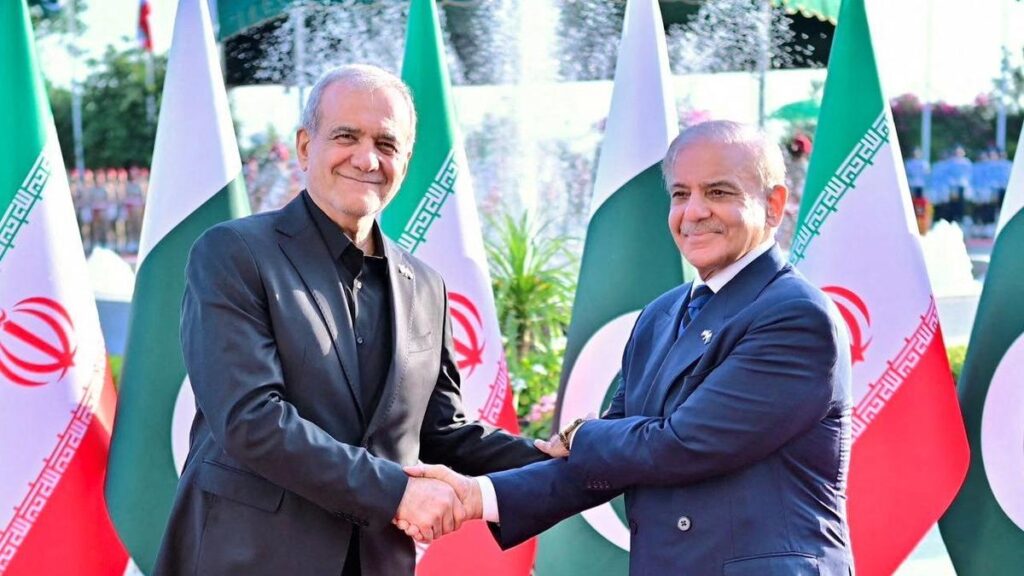
The remark made by Foreign Office spokesperson Tahir Andrabi comes days after Prime Minister Shehbaz Sharif met Iranian President Masoud Pezeshkian on the sidelines of the Shanghai Cooperation Organisation (SCO) summit on Monday (August 31, 2026) and discussed the evolving regional situation.
West Asia conflict LIVE updates – September 2, 2026
“The prime minister had reiterated Pakistan’s commitment to peace through restraint, dialogue and diplomacy, while stressing that the Islamabad MoU offered the most viable pathway to lasting peace and stability in the region,” Mr. Andrabi said.
“Despite recent escalations, we remain hopeful, and we will continue to strive for dialogue and diplomacy,” Andrabi said at a weekly press briefing.
Pakistan Foreign Minister Ishaq Dar also met Iranian Foreign Minister Abbas Araghchi on the sidelines of the summit on Monday (August 31, 2026) and underscored the need for dialogue and diplomacy to promote peace and stability in the region.
Xi visits Egypt as China seeks deeper influence across West Asia
In June, the U.S. and Iran signed an MoU, aimed at bringing peace in West Asia. Pakistan also signed the document as a “guarantor”.
The negotiations collapsed in early July with renewed military strikes amid mutual accusations of agreement violations and deadlocked demands over the Strait of Hormuz – the Gulf chokepoint through which about a fifth of the world’s energy supplies passed in peacetime.
Mr. Andrabi said Army chief Field Marshal Asim Munir had also visited Tehran last week to facilitate an end to the U.S.-Iran conflict.
The visit “underscored Islamabad’s sincere and constructive role in bridging differences between Washington and Tehran,” he said.
Talking about the inaugural meeting of the Strategic, Political and Defence Committee established under the Makkah Joint Defence Agreement, on August 31, he said the three sides reaffirmed their resolve to work together for regional peace, stability and de-escalation, including through restraint and peaceful resolution of crises.
Pakistan, Saudi Arabia and Turkiye signed the trilateral defence agreement, known as ‘Makkah Joint Defence Agreement’, on August 7. Under the agreement, an attack against one of the countries will be treated as an attack against all of them, amid increasing security concerns in the wake of escalating tensions in West Asia.
Mr. Andrabi said that the three countries agreed to further institutionalise cooperation under the agreement, strengthening solidarity, collective deterrence and defence, and cooperative security for “just, inclusive and lasting peace”.
A Secretariat headed by a secretary-general will be established in Saudi Arabia, initially led by a secretary-general from Pakistan for three years, Andrabi said.